The core loop
Spend a coin → type a word → collect the cup → store, use, share, or sell it → observe the result → use what you learned to choose the next experiment.
What the interface looks like
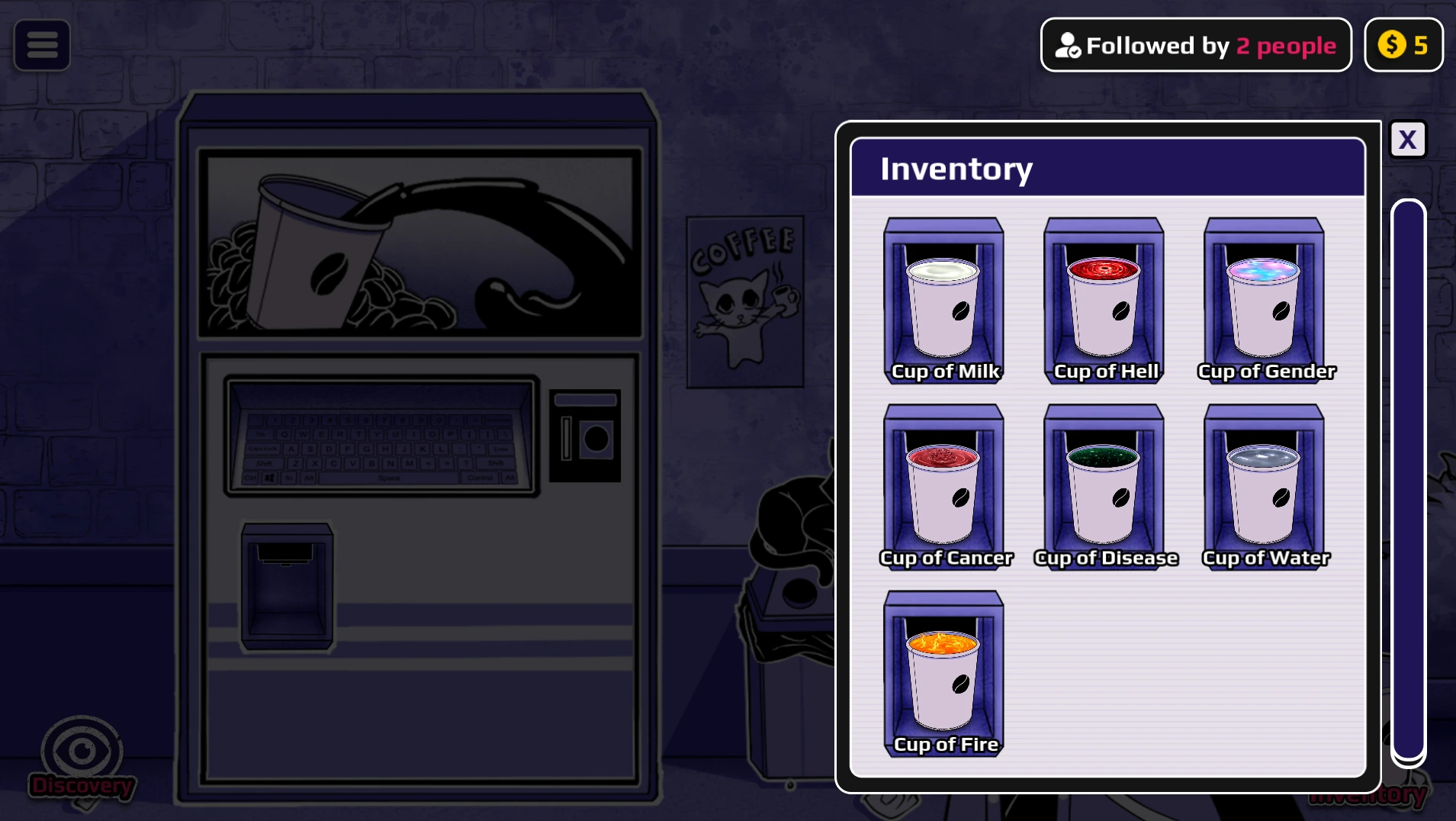
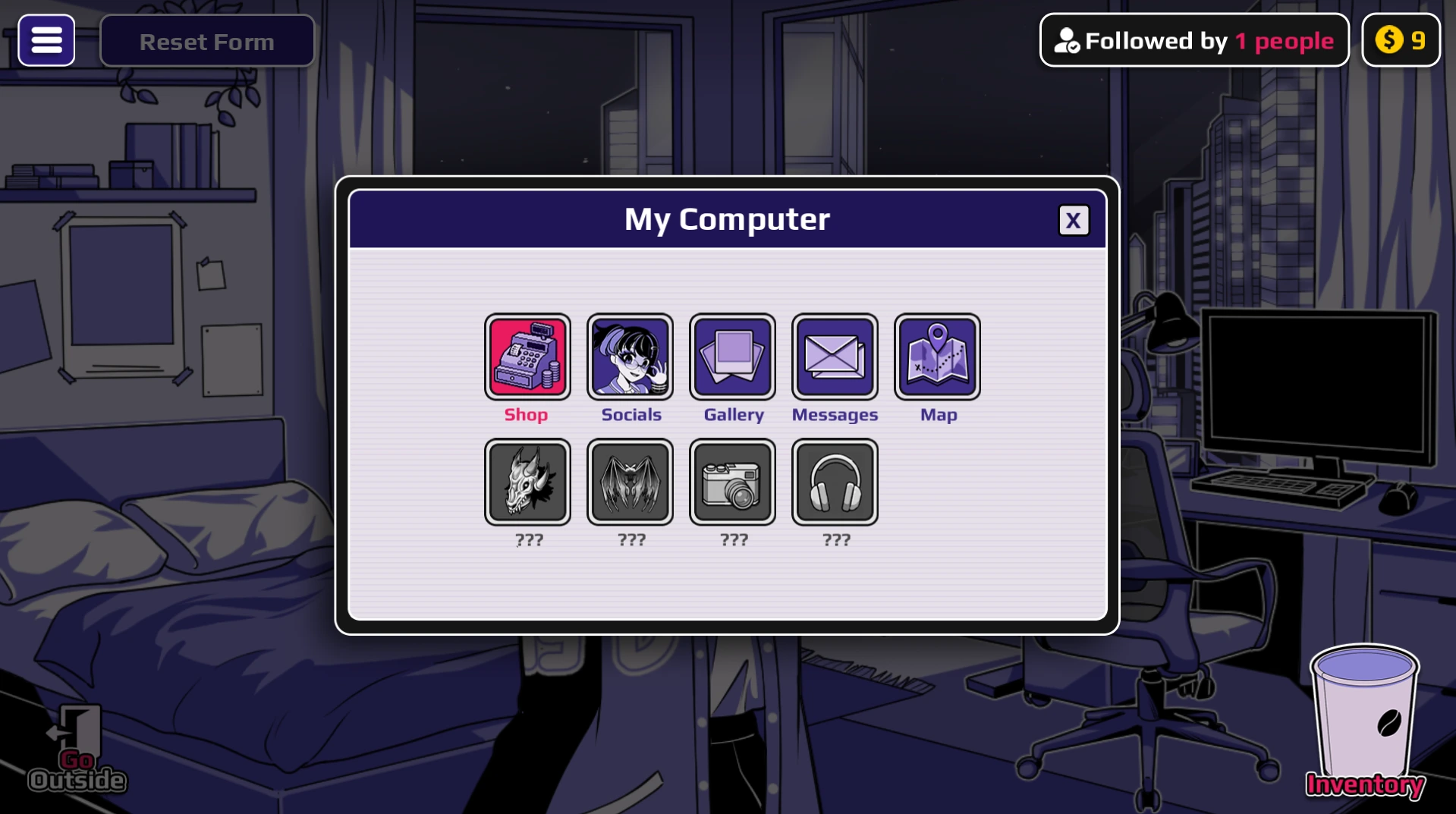
After a cup leaves the machine, Inventory is the handoff point. From Horu's room, the Computer opens Shop, Socials, and Gallery. A cup shown in Inventory can still be assigned a job; a cup left in the dispenser cannot.
The five systems to understand
| SYSTEM | WHAT IT DOES | EARLY-GAME HABIT |
|---|---|---|
| Coffee Machine | Turns accepted words into anomalous drinks. | Change one word at a time so you can connect an input with its result. |
| Inventory | Stores cups after you collect them. | Confirm the cup is present before leaving the machine. |
| Horu | Can use a stored cup and experience its outcome. | Save first if the build offers a save option and you want to compare choices. |
| Neighbours | Provide character interactions and alternative uses for cups. | Carry a cup before visiting an available room. |
| Computer Shop | Lists stored drinks for sale and connects experiments to the money loop. | Start with modest tests; a high price does not guarantee a fast sale. |
What can you do with one cup?
The machine produces a drink, but the decision happens after you collect it. Think of Inventory as a holding place: one cup can be used for one path, so keep or brew extra copies before a comparison.
| DESTINATION | WHEN TO CHOOSE IT | WHAT TO CHECK |
|---|---|---|
| Horu | You want to observe the form or event on the protagonist. | Check the visible result and note the input word. |
| Neighbor | You want to compare a character outcome or prepare a scene route. | Carry the cup to an available room; the mapped v0.1 route uses room 702. |
| Computer → Shop | You want money for more experiments. | Keep the cup unused, list it, and wait to see whether it sells. |
| Mixer | The route shows two inputs joined by a plus sign. | Collect both ingredient cups and combine them without drinking either one. |
| Ordered drinks | The route shows arrows between inputs. | Give each cup to the same character in the stated order; skip the Mixer. |
Accepted word, but no visible change?
A named cup is evidence that the machine accepted the word; it is not proof of a direct transformation. Death and Immortality are useful in mapped recipes or sequences without a direct visible form in the v0.1 reference. Pregnant is a result name: type life for that route. AngelDemon is made from heaven + hell in the Mixer. Use the word reference and form guide to identify the next action before spending another coin.
How keywords should be tested
Think of each word as an experiment rather than a password. Begin with clear nouns and concepts, record what the build accepts, and avoid assuming that similar words produce identical results. An unsupported word, a misspelling, or a word reserved for a later build may not produce a useful cup.
- Test one variable at a time. Use a new word while keeping the target character and location the same.
- Keep useful cups. A cup in Inventory may be more valuable for a later interaction than an immediate effect.
- Separate direct results from combinations. If two actions happen in sequence, record the order; later outcomes may depend on it.
- Expect version changes. The game is in development, so a route from another build may not match the browser demo.
How the Shop fits the loop
The Shop turns discoveries into resources for more experiments. A listed drink needs a price and time to attract a buyer. Treat early listings as tests: compare whether a lower or higher price changes how long the item remains listed, and avoid tying up every stored cup at once.
Avoid false certainty: public builds can change pricing and sale behavior. Any guide promising a universal “best price” without naming the tested version may become inaccurate.
A useful first-session plan
- Complete the first cup route.
- Keep one cup and use another to compare outcomes.
- Visit each room the current build allows.
- List one spare cup in the Shop.
- Return to the machine and test a different category of word.